Monchhichis celebrate New Year

relating the time of the New Year:
2016 - Year of the ape
Shishimai
Takoage
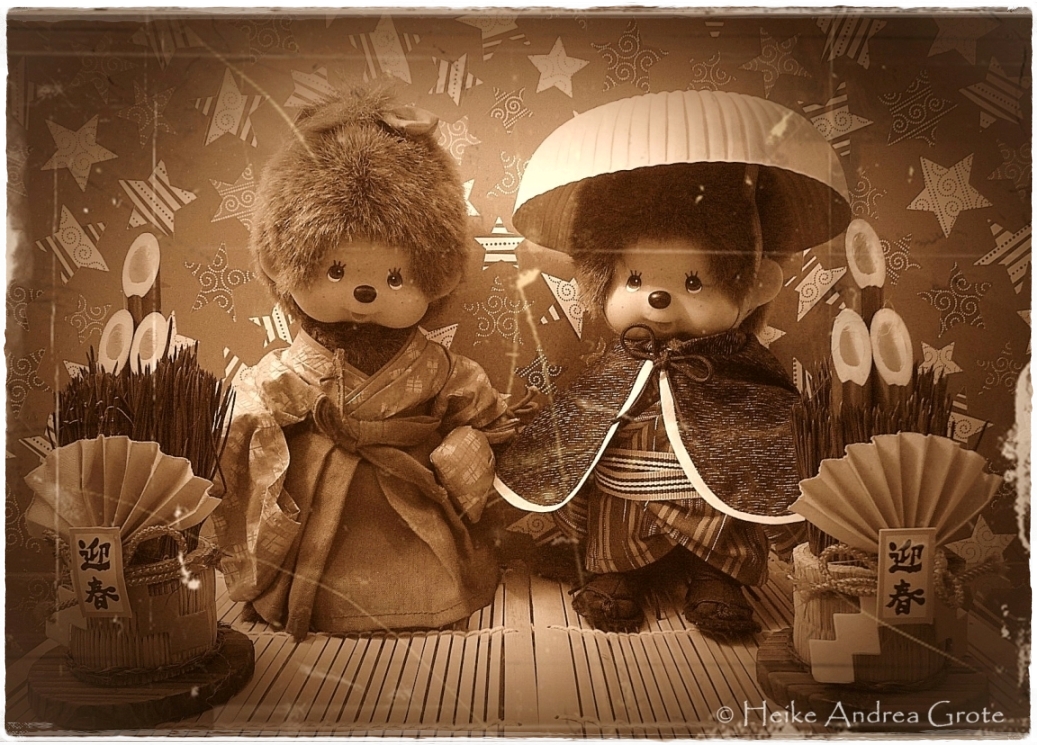
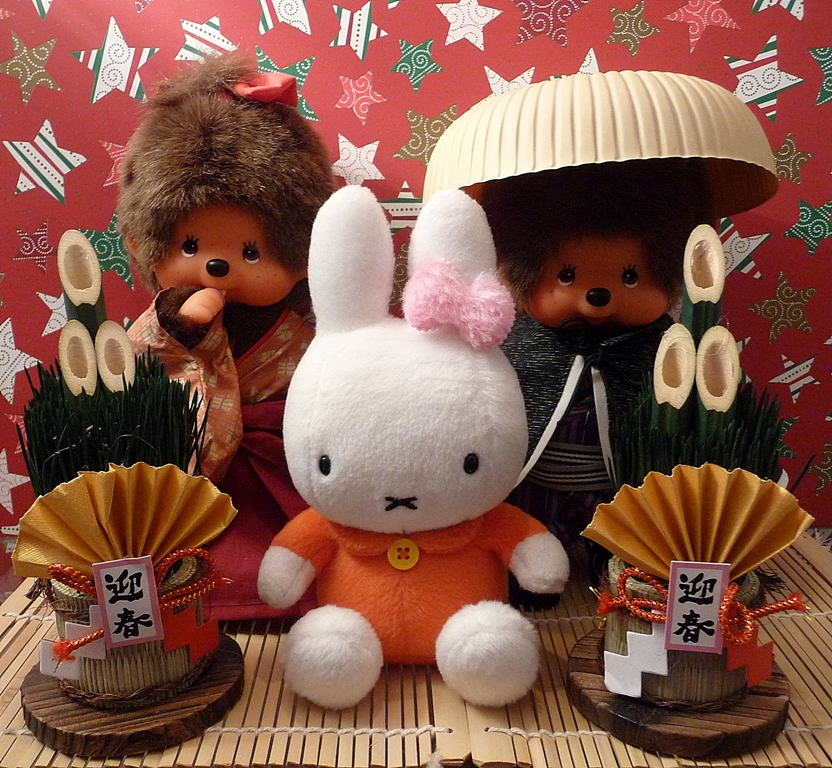
Kadomatsu
2016 - Year of the ape

Monchhichis celebrate the new year.
2016 is the year
of the ape.
Shishimai
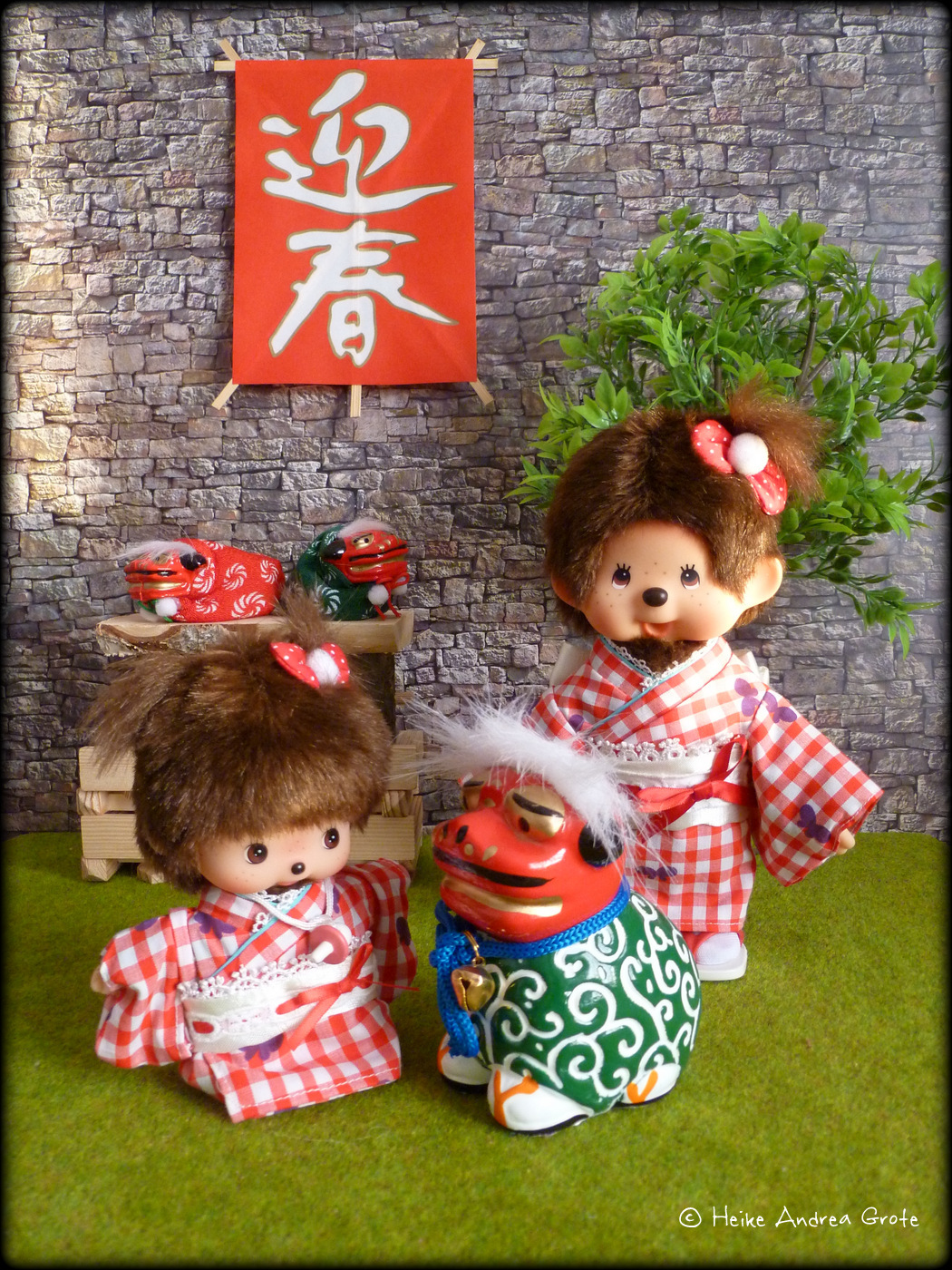
New Year Lion Dance
Adapted
from
China, the Lion dance is often performed around the New Year
by one or two lions
accompanied by bamboo flutes and drums. The Japanese call the lion dance shishi-mai—獅
子舞—or shiahi-odori—獅
踊り.
Lion dance in Japan is a practice of Shinto.
It
is
performed as a prayer for household safety and a good
harvest.
The lion
dances around the New Year to push away evil spirits and
bring on good luck.
There
are
regional variations; one or two people wearing the lion
costume, and one or two lions dancing.
At the end of the dance, the lion "bites" the heads of some
watchers, to bring luck.
Japanese lions dance at least twice a year—once in January, the
official calendar New Year and
again during Sakura—Cherry Blossom—Season.
The coming of sakura marks the beginning of fiscal and
academic years,
plus it signals other flowers to come alive for warm
weather.
Here you can watch the Japanese Lion Dance:
Cute video about the reaction of Japanese kids getting bitten by the lion:
Lion Dance performed in a tiny village, Urayama, located in the mountains of Okuchichibu:
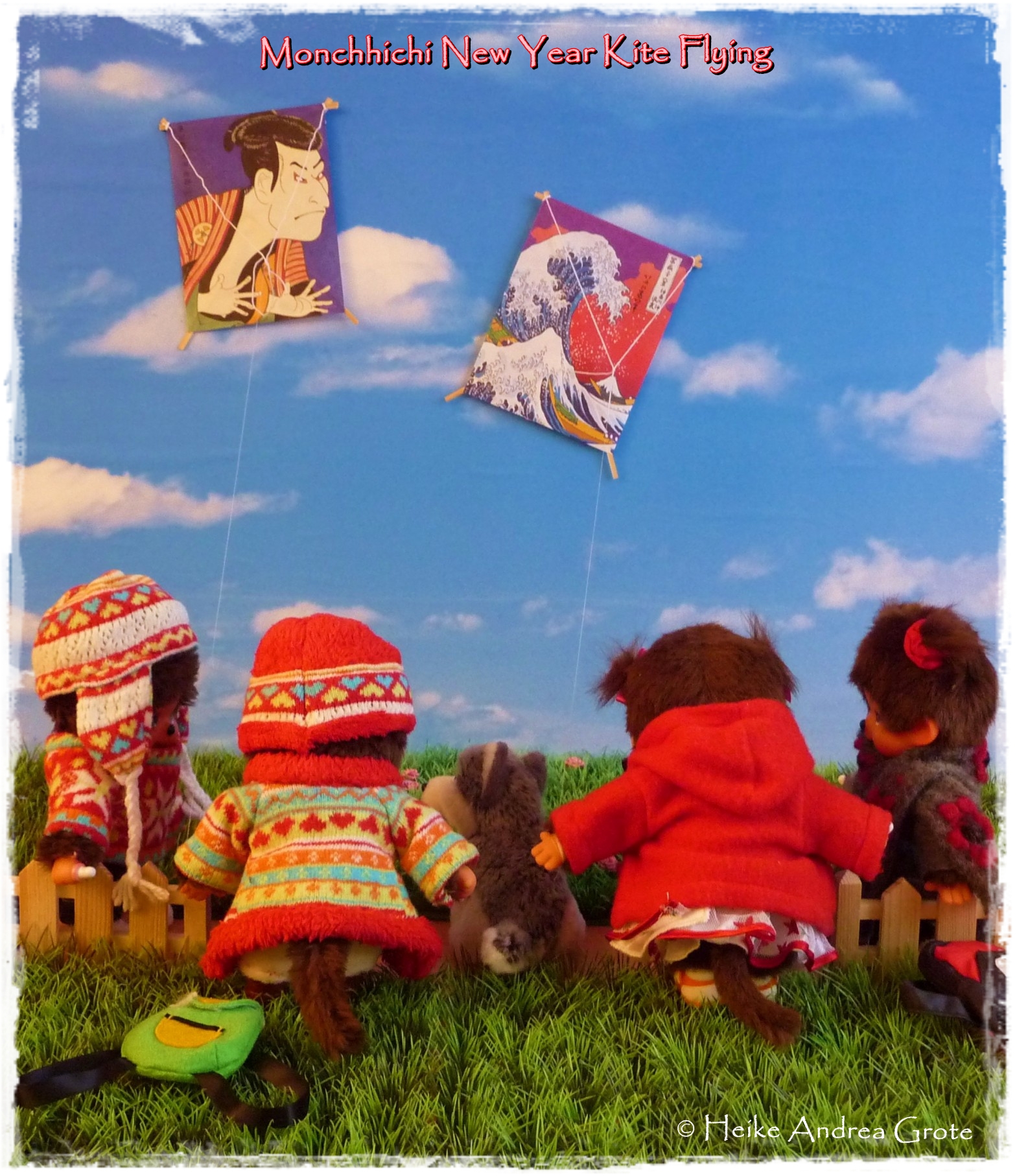
Takoage is a common activity throughout Japan in which children fly kites on New Years Day.
Kites vary considerably in shape and decoration according to the locality.
As in the past, kite-flying contests are still held all over Japan at this time.
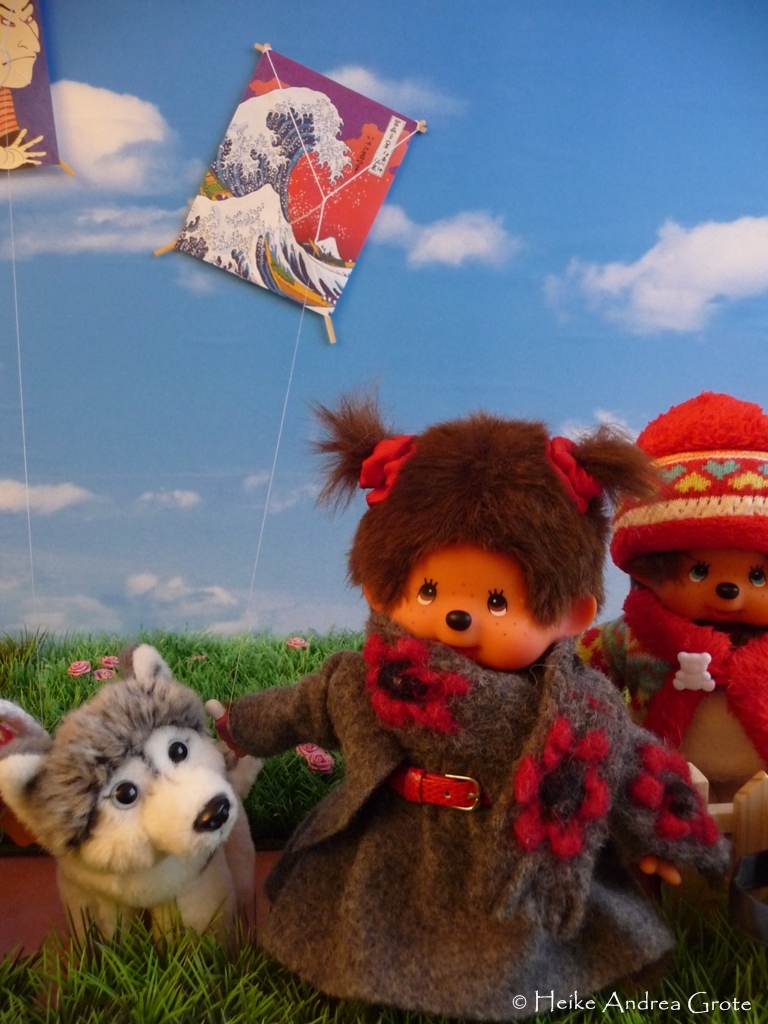
They are pulled with strings and flown high up in the sky
using the force of the wind.
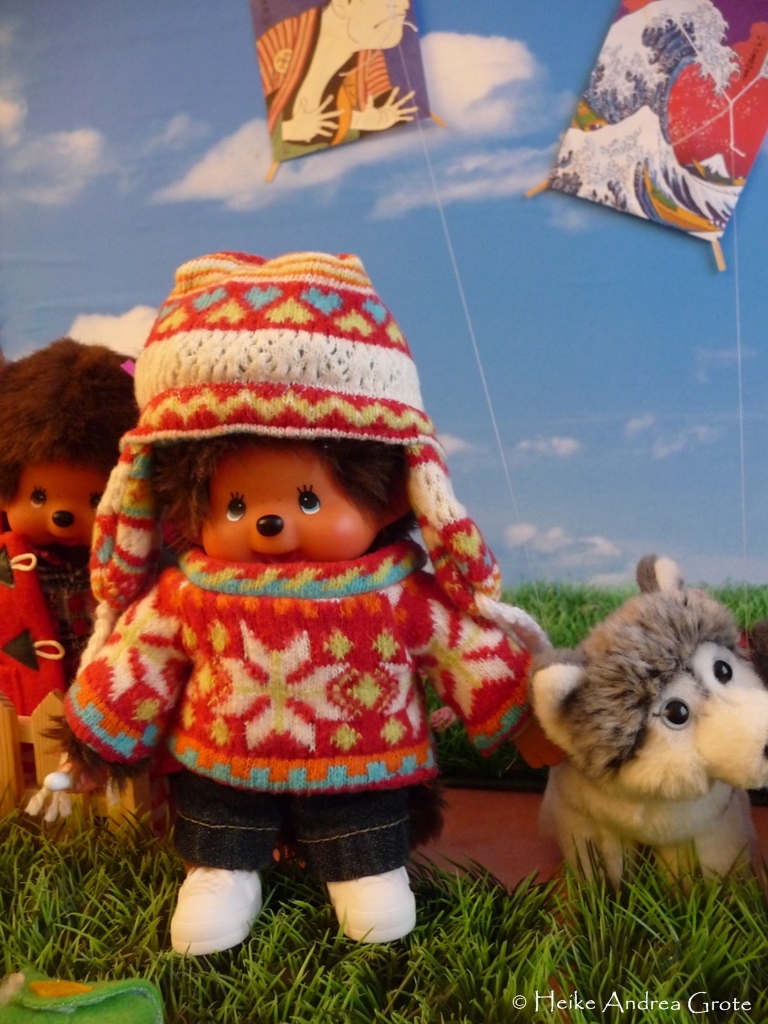
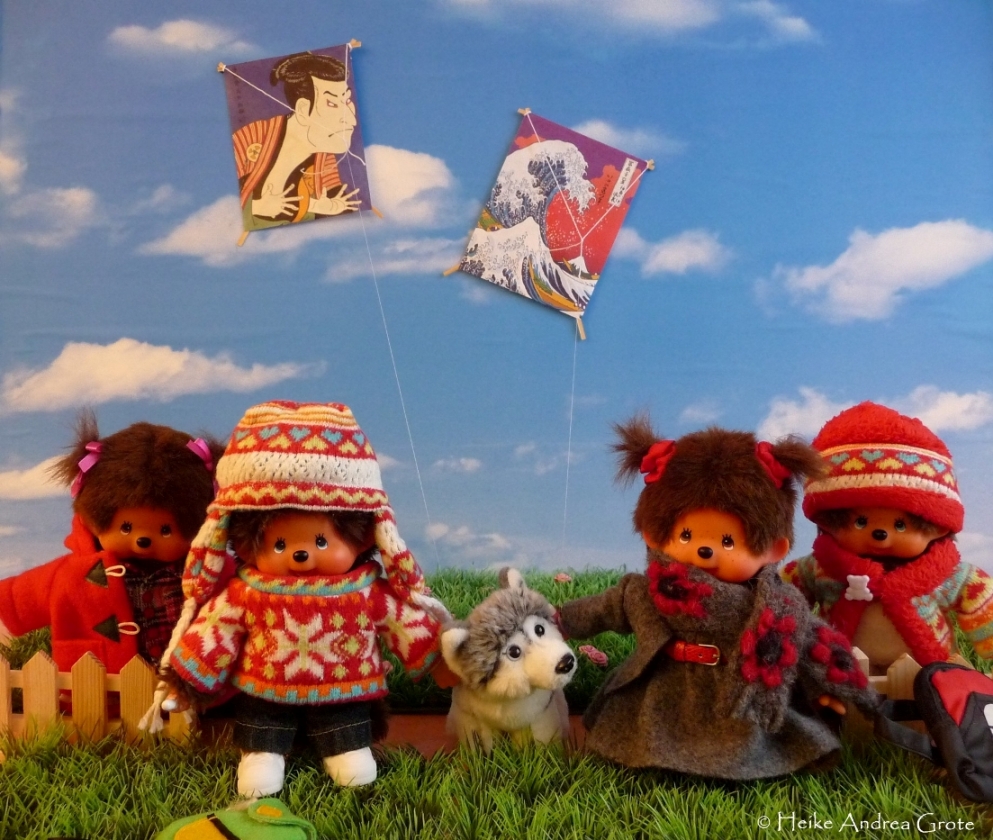
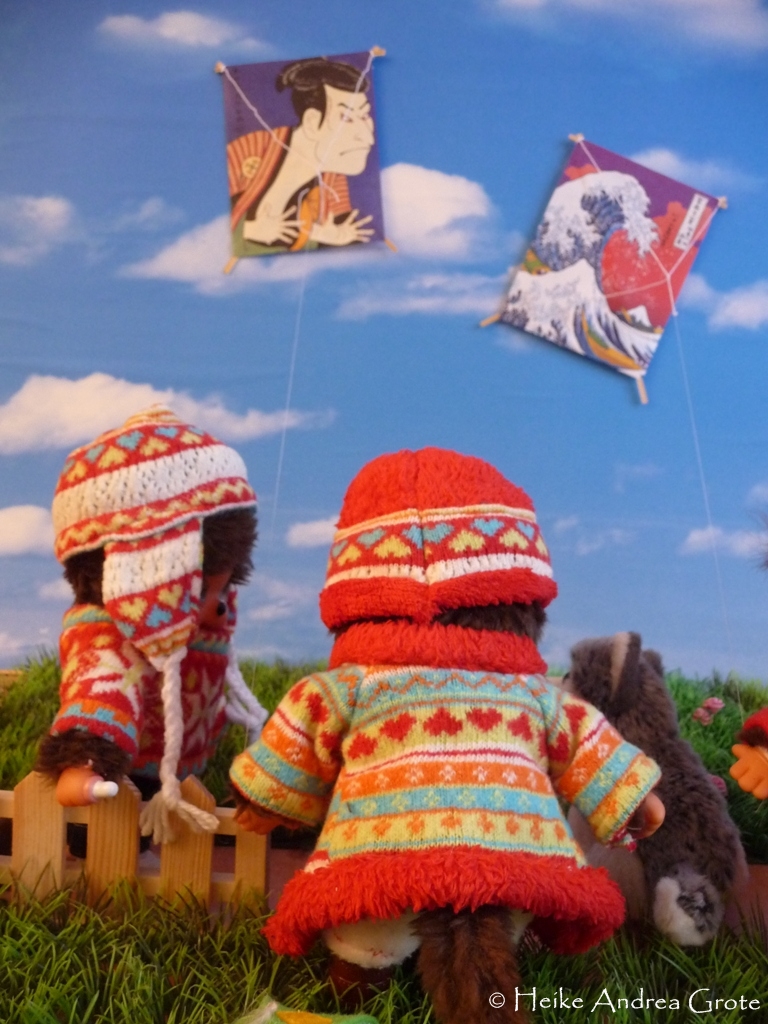
The Monchhichis fly two kites with the design of Ukiyo-e paintings.
.
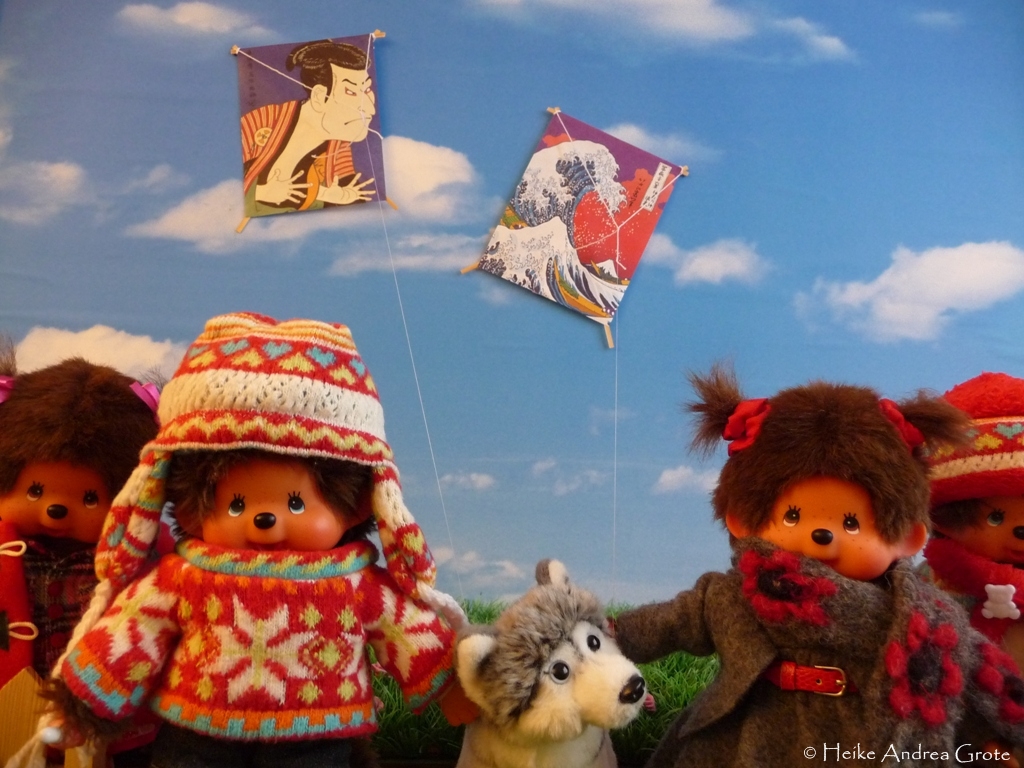
Ukiyo-e is a genre of Japanese woodblock prints (or woodcuts) and
paintings produced between the 17th and the 20th centuries.
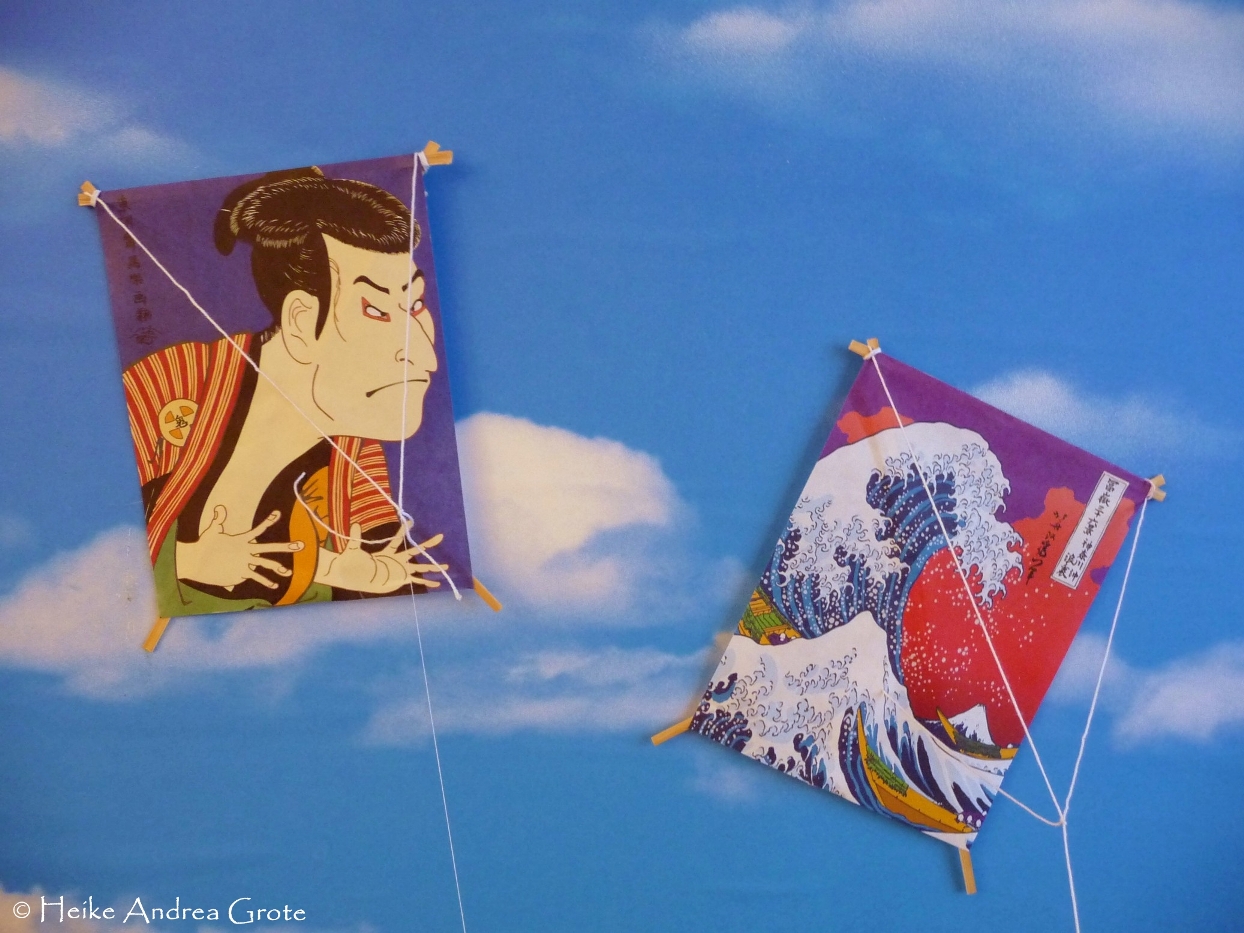
The Ukiyo-e paintings feature motifs of landscapes, tales from history, the theatre
and pleasure quarters. It is the main artistic genre of woodblock printing in Japan
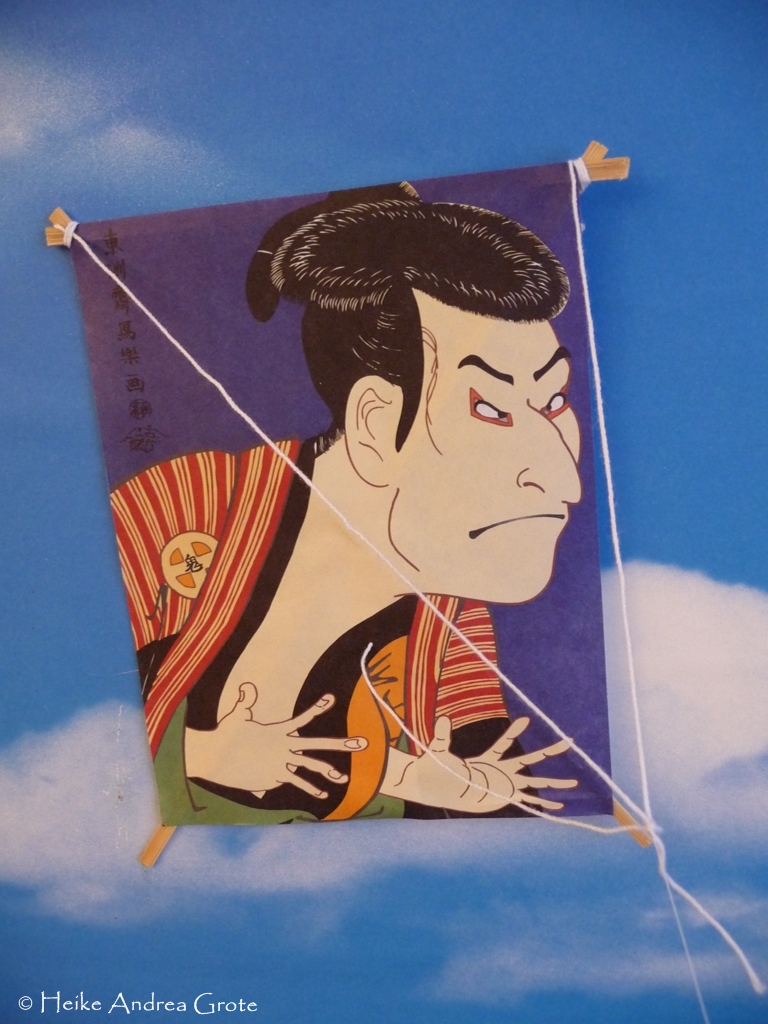
The kite shows a painting of Otani Oniji II, dated 1794 from Toshusai Sharaku.
The Kabuki actor Otani Oniji II in the role of Yakko (manservant) Edobe.
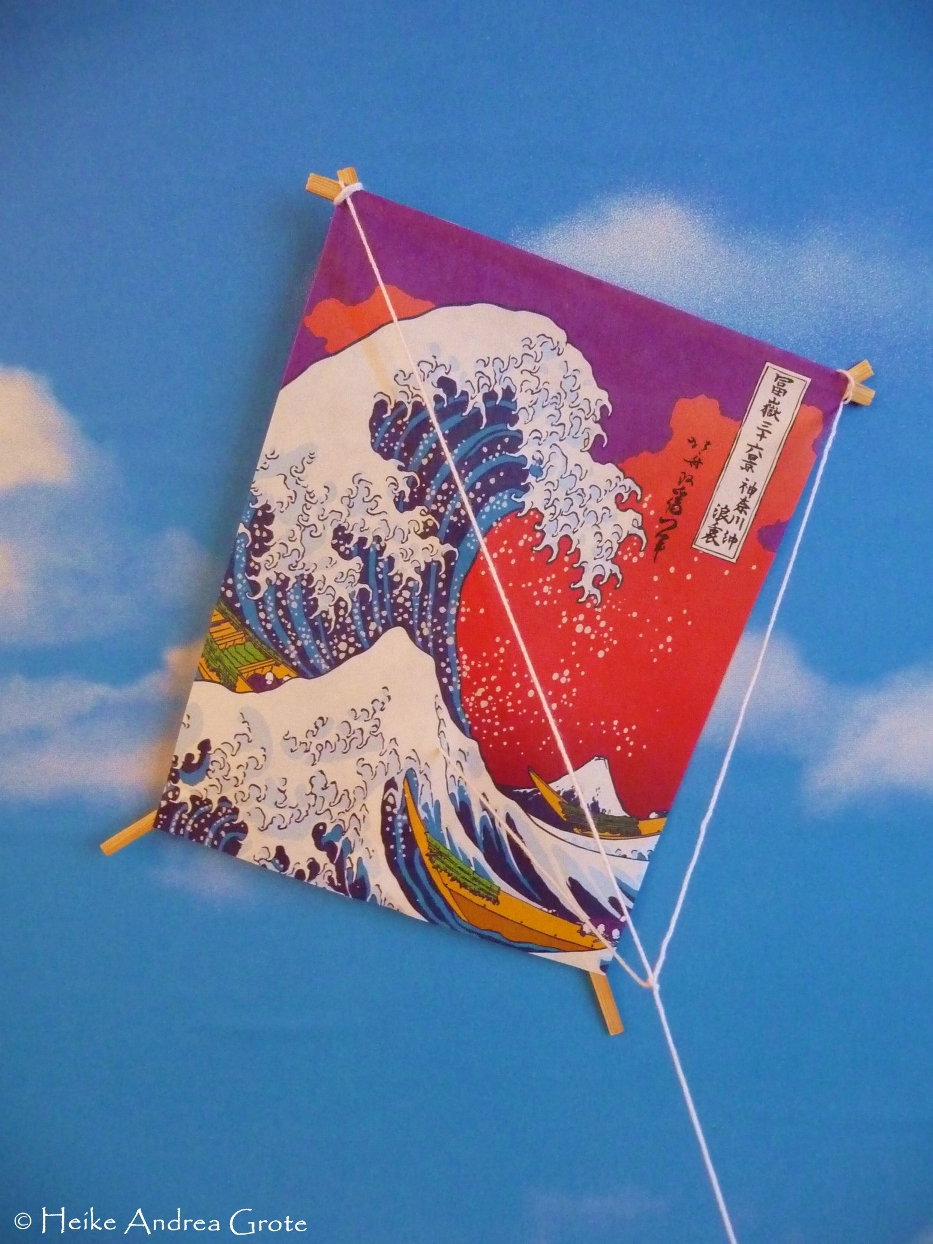
The kite shows a painting which is named “Kanagawa oki nami ura”
(The big wave in front of Kanagawa)
dated ca. 1830 from Katsushika Hokusai
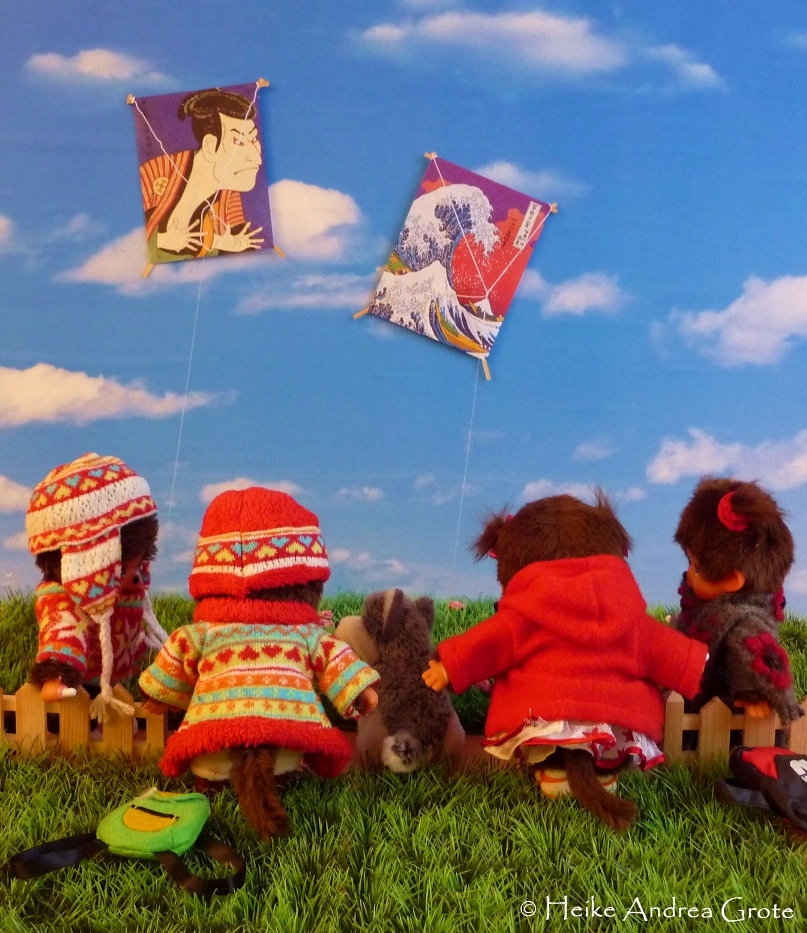
because everyone should have the possibility to fly a kite at New Year :o)
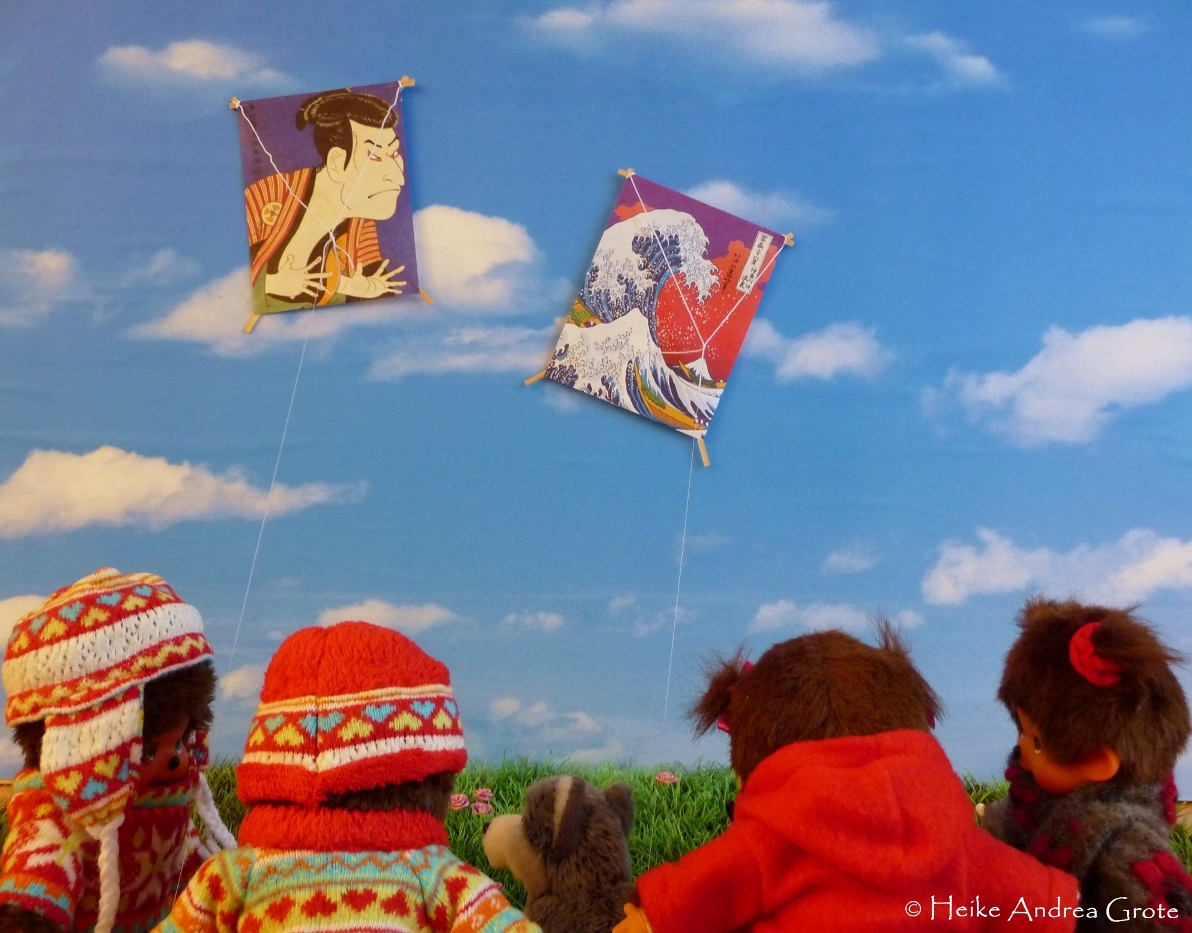
Look, how high our kites can fly!
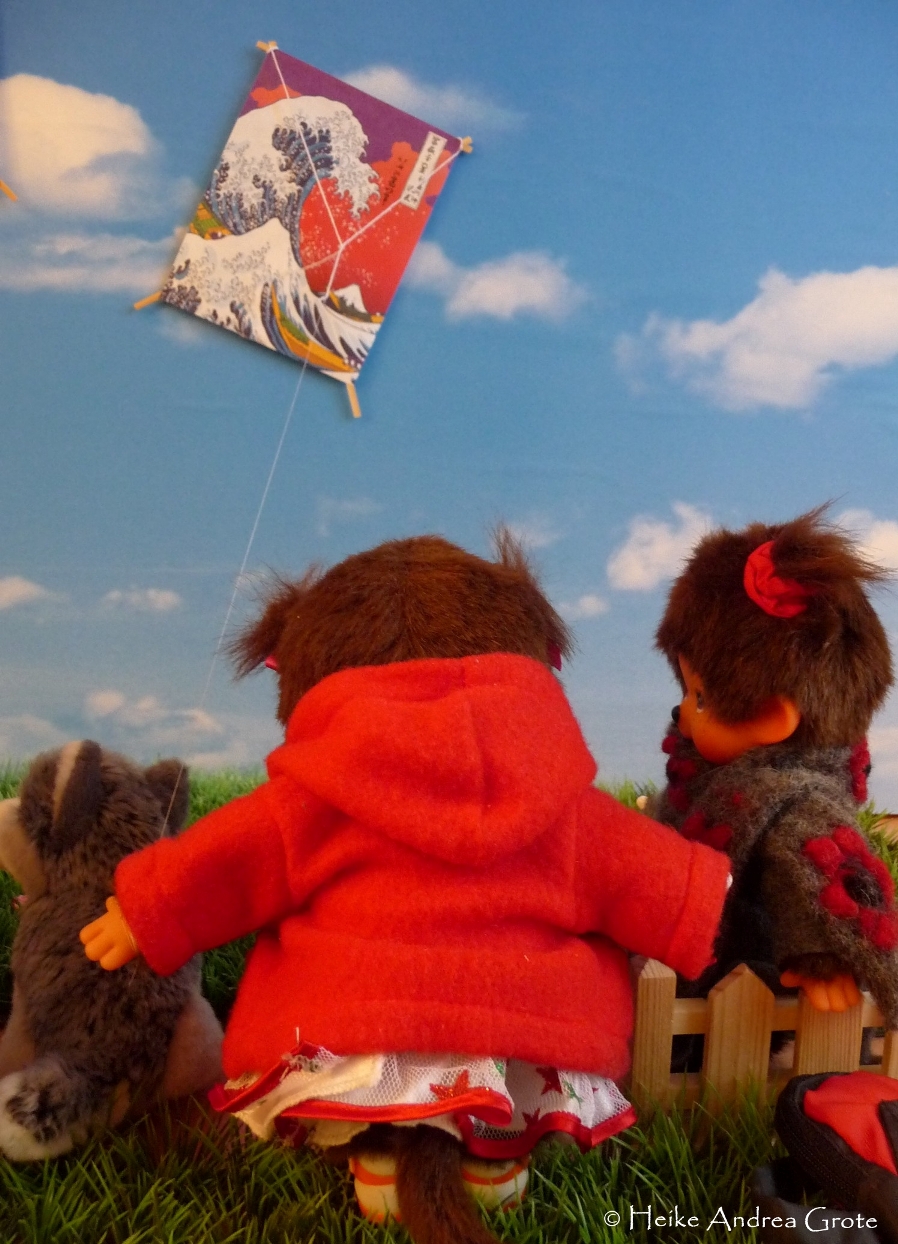
Cherry loves to fly a kite. It is so exciting!!
Here you can see a video about japanese kite flying at New Year:
Sources about Takoage:
Kadomatsu
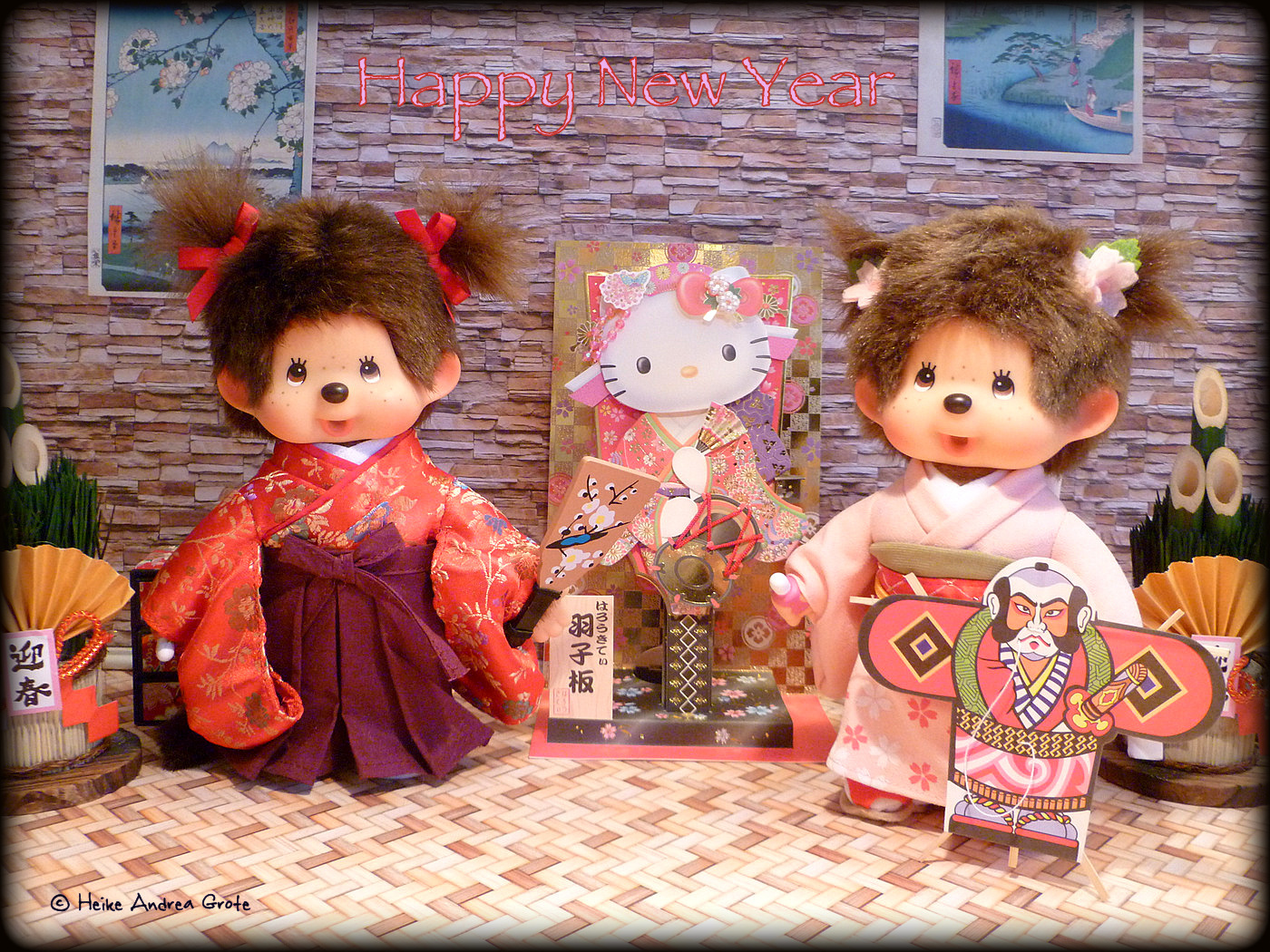
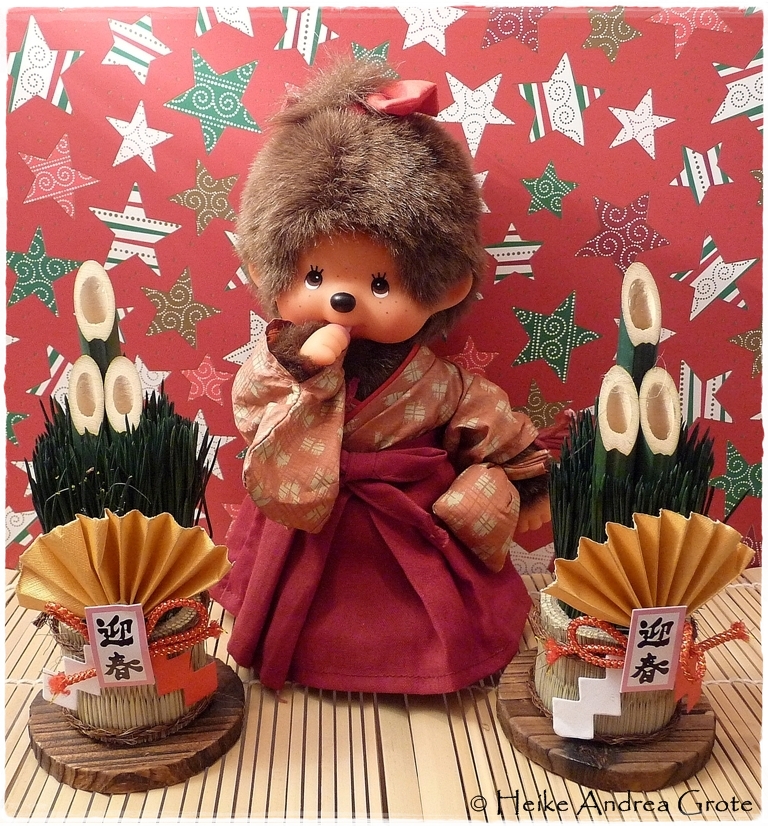
Kadomatsu
decoration
The
New
Years decoration called "Kadomatsu" is placed after Christmas
until January 7 (or
January
15 during the Edo
period)
and are considered temporary housing (shintai)
for “kami” (spirits).
Designs for kadomatsu vary depending on
region but are typically made of pine,
bamboo,
and
sometimes ume
tree sprigs which represent longevity,
prosperity and steadfastness, respectively.
The fundamental function of the New Year ceremonies is to honor
and receive the toshigami
(spirits of ancestors), who will then bring a bountiful harvest for
farmers and
bestow the ancestors' blessing on everyone.
After January 15 (or in many instances the 19th) the kadomatsu
is burned to appease the kami or toshigami
and release them.
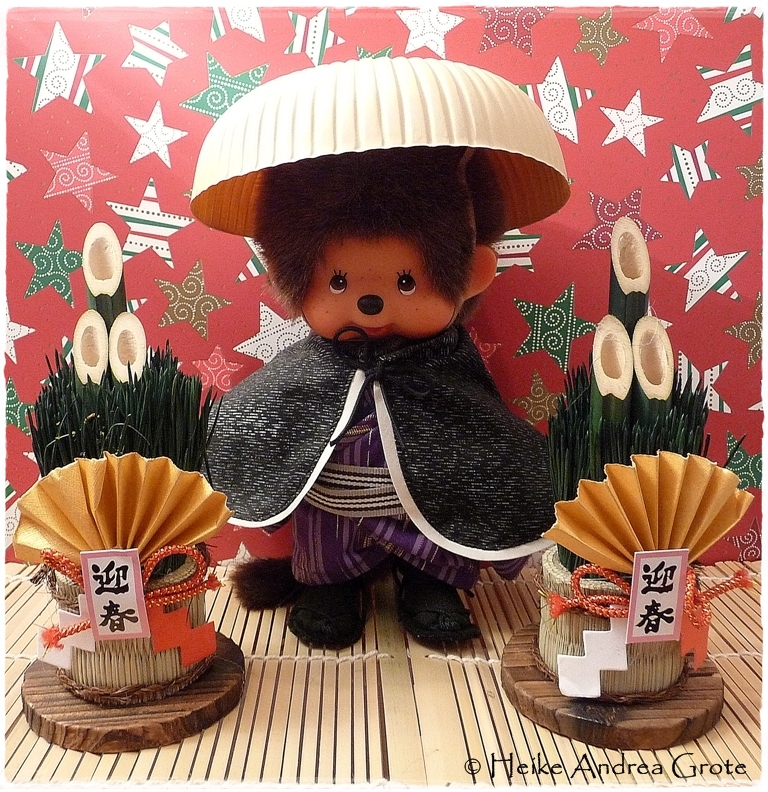
Kadomatsu Construction and placement
The central portion of the kadomatsu
is formed from three large bamboo shoots. Although plastic kadomatsu
are available.
Similar to several traditions of ikebana
(Japanese flower arrangement),
the
shoots are set at different heights and represent heaven,
humanity
and earth
with heaven being the highest and earth being the lowest.
Some
kadomatsu place the humanity and earth shoots
at the same height.
After binding
all the elements of the kadomatsu, it is
bound with a straw mat and newly woven straw rope.
Kadomatsu are placed in pairs on
either side of the gate,
representing male and female.
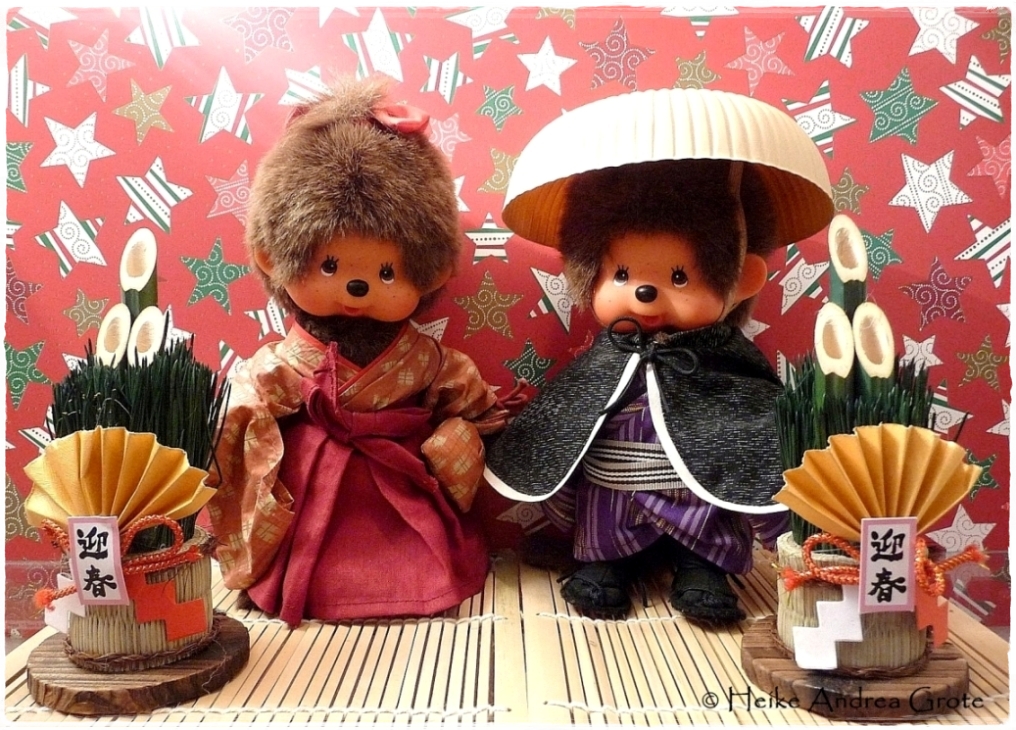
Do you have a special decoration in your country at New Year?
In Germany we do not have one for that day.
Here you can hear and see an interpretation
of the japanese Happy New Year (Oshogatsu) song :
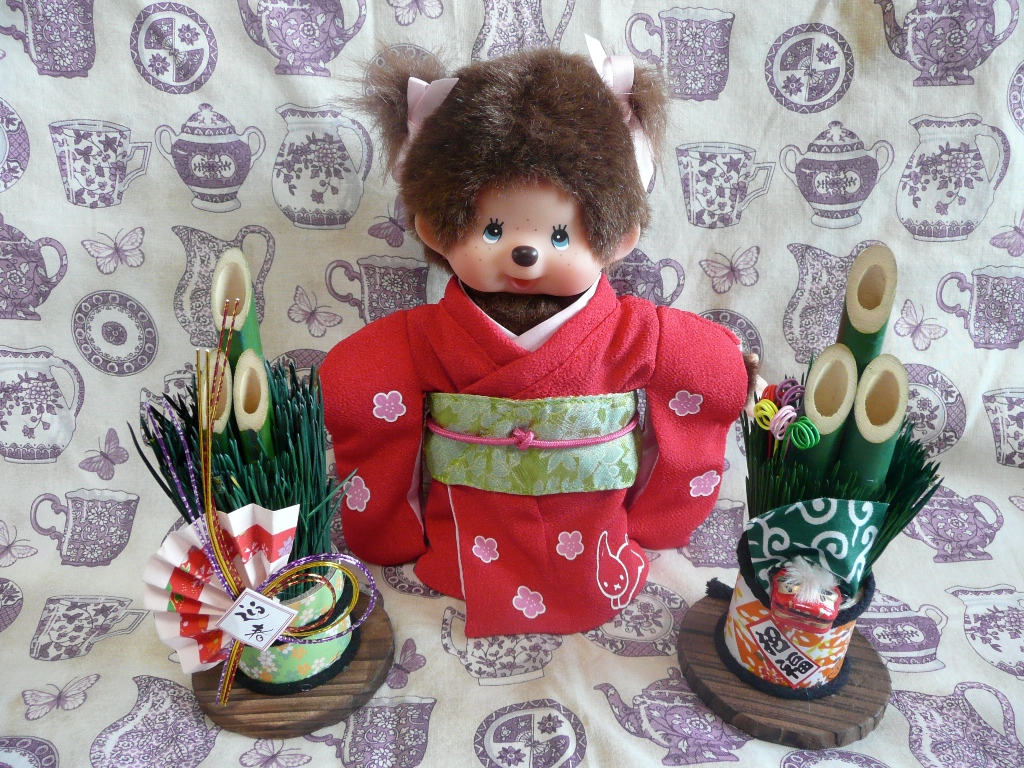
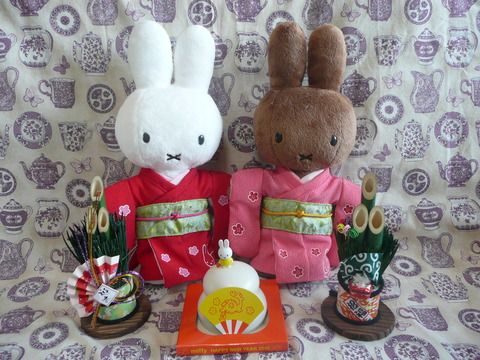
Here you can watch more cute Kadomatsu
pages:
Here you can watch my Happy New Year Celebrating page:
Facebook Comment Box
photos
by Heike Andrea Grote.
You are not allowed to copy or
publish them.
Thank you.
